
First, it's to vital to know that AI only creates value when it improves the quality, speed, and consistency of critical business decisions at scale. A generic rollout of CoPilot across your organisation is highly unlikely to get you there.
With technology evolving at a rapid rate and global economic conditions affecting companies across Australia and New Zealand, it’s understandable that executives and boards are feeling the pressure to "do something with AI" without knowing where to start.
On top of this, they’re being asked to make faster, better-governed decisions in conditions of greater complexity. All while reducing costs, improving ROI, and managing new technology risk.
This isn’t a new challenge by any means. But it’s now at a scale never seen before.
Artificial intelligence is on top of everyone's minds as it has promised business transformation and a new dawn. However, AI is only a tool and as such needs to be implemented correctly.
When unleashed strategically (rather than a blanket CoPilot roll-out) AI can drive meaningful growth but first you need to identify the areas where it will have the best impact.
AI – especially Generative AI - is often deployed as an isolated technology initiative, not as a decision improvement strategy at a C-suite and board level, despite heavy investment. Gartner reports that only 28% of AI use cases in infrastructure and operations fully succeed and meet ROI expectations, while 20% fail outright. Additionally, IBM’s CEO Study found that 50% of executives say that the fast pace of recent AI investments has left their organisation with disconnected, piecemeal technology. Boards are under pressure to improve margins and growth, reduce risk, and make faster decisions that turn the needle. And AI is typically seen as a solution to these business objectives.
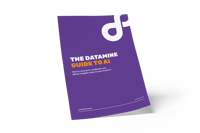
Dig into the difference between GenAI and predictive modelling (and discover why we much prefer predictive modelling for meaningful value) by downloading our executive-level guide.
Large companies usually operate on a small set of decision systems that power the economic engine of the business, such as revenue, margin, risk, and customer lifetime value. They may include:
What you sell, where and when? How much inventory should your company hold at any one time?
What pricing maximises margin and volume without eroding customer trust?
See our case study
Who to target, with what offer, through which channel, and when?
See our case study
How many people should be rostered, with which skills, in which roles, at what time?
See our case study
How do we flow goods and run operations most efficiently under constraints?
See our case study
Where should we compete, invest, or exit?
See our case study
Is this transaction, claim, or customer behaviour legitimate? If not, what is it costing us?
When these decision systems are weak, slow, or poorly governed, performance suffers - regardless of how expensive or popular the technology is you’re using. Now, not every company needs to optimise all of these – typically only 3-4 truly drive performance - but every organisation depends on several of them to perform well. AI creates tremendous value when it improves the quality and speed of these decisions systems. It’s the ultimate enabler.
Amazon embeds AI deeply into its demand forecasting and pricing decision systems, not as discrete or isolated “AI projects.” AI continuously informs what inventory Amazon holds, where to place it, and how prices adjust in real-time across millions of SKUs.
Unilever uses AI for planning, forecasting, pricing and replenishment systems, improving growth and product efficiencies. Their AI-powered customer connectivity model for collaborative planning, forecasting and replenishment is capable of running more than 13 billion computations per day.
No matter the company or industry, the reoccurring theme is this: AI sits inside the economic engine, not beside it. It has the power to simultaneously improve growth and efficiencies and reduce costs and risk.
Rather than deploying another GenAI tool, true transformation comes from choosing which decision systems to improve and then selecting the AI technology to enable it. Generative AI gets a lot of attention and hype, but it’s generally more useful at a productivity level in the hands of individual employees. But that is neither transformational nor what will move the needle in your company. Deciding if AI is right for you and your company, ask yourself these questions:
Do you know which decision systems primarily drive the engine of your business?
Which ones are fragile, slow, or suboptimal?
Are your currently funding AI experiments or strengthening the engine of the business?
How does your company govern AI decisions at scale?
If you’re not sure where you stand on any of these questions, that’s okay. That’s where a trusted, experienced partner like Datamine comes in. A partner can help your company identify the highest-value decisions and then design AI-enabled systems that deliver significant commercial outcomes.
Keen to deliver strong commercial vale to your company using AI, but not sure how it all works? We’re here to help demystify it all. Here’s what a typical process looks like for driving commercial growth with data analytics and AI.
Every AI transformation and decision system project begins with identifying which decision systems matter most for a company. Are any of them weak, or even missing? The trick to delivering the most ROI is by choosing the right focus area. Next, we quantify the economic impact. This is commonly done via a knowledge discovery or an envisaging design session with your top people.
The decision system is designed, and often incorporates AI, analytics, governance and process changes. We’ll often design this collaboratively via one of our popular solution design sessions.
Next, we put a clear business case in front of your executive team that you can take into any board, finance or sponsorship conversation with confidence. This outlines cost, scope, timeline, and what it's expected to return.
Rather than rushing into a full-scale rollout, it’s important to pilot the capability first. This allows Datamine and your company to test, measure and optimise the new system, ensuring it delivers the maximum value for your company. Once the pilot proves the economic value, we scale and move into a full rollout. Your company objectives are achieved, and you become the hero of the boardroom.
It's time to make it stick. We put training, documentation, accountability and operating rhythm in place before we step back.
We don’t stop here, though; continuous optimisation and measurement is paramount for ongoing success. We track the metrics we agreed to at Commit and report back against them — revenue gained, cost taken out, efficiency captured, customers better served.
Deriving ROI from AI is possible when you focus on the decision systems that move the needle for your company. An AI-enabled decision system can help you drive revenue growth and margin, improve customer retention, reduce risk, and improve overall productivity and efficiency within the business. Datamine can help you get there. We’ve helped Australian and New Zealand companies return ROI from AI for over 30 years (yes, long before ChatGPT arrived on the scene). As your trusted advisor and technical architect, we’ll help you focus on the right decisions and build AI build where it genuinely pays off for your company. We’d love to jump on the phone for an initial chat. Get in touch with our consultants today.